
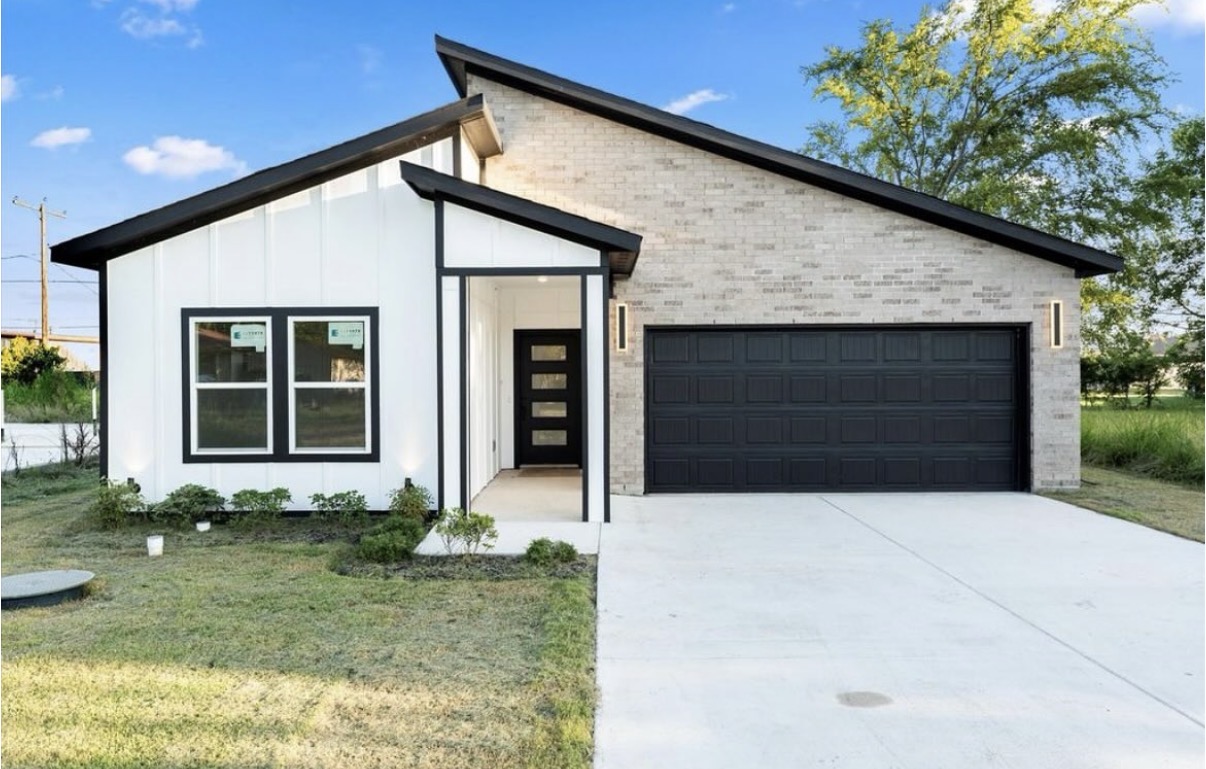
Most people who buy a new construction home in DFW do it without ever asking the questions that matter most.
Not because they’re careless. Because nobody told them what to ask. The builder’s sales rep walks them through the model home, the finishes look great, and they sign before they understand what’s actually included — and what isn’t.
This post is for people who want to do it differently.
We’re a builder. We have skin in this game. But we’d rather you come to us informed than come to us confused and frustrated six months after closing.
First: understand what kind of home you’re actually buying
New construction in DFW isn’t one thing. There are two very different products on the market, and most buyers don’t realize they work differently until they’re already in the process.
Spec homes are built before a buyer exists. The builder sources the land, designs the floor plan, makes every material decision, and puts the finished product on the market. You’re buying something that’s already built — or almost built. You have little to no input on the layout, finishes, or fixtures. What you see is what you get.
Build-to-suit (also called custom builds) is the other way. You work with the builder from the beginning. The land gets sourced, cleared, and permitted with you in the loop. You make the decisions that matter to you — square footage, room layout, kitchen finishes, whatever it is you care about. The home gets built for your situation, not for a hypothetical buyer.
Neither is better. They serve different needs. A spec home closes faster and involves less decision-making. A build-to-suit takes longer and requires more involvement, but the result is a home that was designed around how you actually live.
The mistake buyers make is not knowing which one they want before they start talking to builders.
Five questions to ask before you commit to anything
These are the questions most buyers don’t think to ask until something goes wrong.
1. Who is the actual general contractor on my project?
This sounds obvious. It isn’t. A lot of companies that call themselves home builders are really project managers — they hire everything out and coordinate the subs. That’s not inherently bad, but it means the quality of your home depends on whoever they’re using that month.
Ask specifically: who is the licensed general contractor? Is that person employed by the company, or are they a subcontractor? How much oversight do they have on the job site day to day?
2. Do you pull the permits in-house?
Permits aren’t glamorous, but they matter. When a builder pulls permits themselves, they’re accountable to the inspections. When they outsource permitting — or worse, when they build without required permits — the problems don’t show up until you try to sell the home or make a claim.
Ask to see the permit history on a previous build. A builder who does this right will have no problem showing you.
3. What’s included in the base price — and what isn’t?
Get this in writing before you get excited about anything. Base prices on new construction often exclude things buyers assume are standard: certain appliances, landscaping, driveway, window blinds, gutters. The list varies by builder.
The number you see in the listing is rarely the number you pay at closing. Know the difference before you fall in love with the house.
4. How do you handle cost overruns?
On build-to-suit projects especially, ask this directly. Materials prices shift. Unexpected site conditions come up. What happens when the project costs more than the contract says?
Some builders have fixed-price contracts that protect the buyer. Others pass overruns through. Know which one you’re signing before you sign.
5. Can I talk to someone you’ve built for in the last 12 months?
Not a testimonial on the website. An actual person, with a phone number, who bought or built with this company recently. Any builder worth hiring will say yes immediately.
If the answer is no, or if it takes two weeks to produce a single reference, that tells you something.
What “ground-up construction” actually means
This phrase gets used loosely. When we say ground-up, we mean the whole thing — from raw land to finished home, with every phase managed in sequence.
That means land acquisition comes first. Then site clearing and grading. Then permits — which in DFW can involve the city, the county, utility companies, and sometimes the HOA depending on where you’re building. Then foundation. Then framing. Then rough-ins (plumbing, electrical, HVAC). Then insulation, drywall, finishes, inspections, and final walkthrough.
Each phase affects the next one. A foundation pour that happens in bad weather creates problems at framing. Rough-ins done carelessly create problems at inspection — or years later when something leaks.
When you buy new construction, ask the builder to walk you through their process phase by phase. Not the marketing version. The actual sequence of events, who’s responsible for what, and what happens if something needs to be redone.
A builder who can’t explain their own process clearly is a builder you should think twice about.
Red flags in the DFW new construction market
DFW has a lot of builders right now. The market has attracted a lot of new entrants since 2020, and not all of them have the experience to back up what they’re selling.
A few things worth paying attention to:
Unusually fast timelines. Ground-up construction in DFW typically takes 6 to 12 months depending on size and complexity. If someone is promising 4 months on a full build, ask how. Speed often means something is getting skipped.
Vague answers about permits. If a builder gets uncomfortable when you ask about the permitting history on a property, find out why before you proceed.
No physical presence on the job site. Drive by the site during construction. Is anyone actually there during business hours? Are materials staged properly? Is the site secured? What you see during the build is a preview of how the finished product will be managed.
Price that’s significantly below market. We all want a deal. But new construction in DFW has real material and labor costs. If the number seems too good, the question is where they’re making it up — and it’s usually in the things you can’t see.
Why working with a family-owned builder is different
We’re not the biggest builder in DFW. We’re not trying to be.
What we are is hands-on. Cristal is on the job sites. She’s in the permitting office. She manages the subcontractors she’s worked with and vetted over years in this industry. When you call with a question, you’re talking to the person making the decisions, not a customer service rep reading from a script.
With 17 years of general contractor experience behind us, we know where every corner in residential construction is. We also know exactly what happens when someone cuts one. That’s why we don’t.
If you’re thinking about new construction in DFW — whether that’s buying a spec home or starting a custom build from scratch — we’re happy to talk through your situation before anything else. No commitment, no pressure.
Before you talk to any builder, know this
New construction is not the same as buying a resale home. The protections are different, the process is different, and the risks are different.
Get everything in writing. Ask the questions above. Talk to past clients. Drive by active job sites. And if something feels off during the sales process, trust that feeling — because it’s a lot easier to walk away before you sign than after.
The Dallas–Fort Worth market has good builders doing honest work. It also has people who got into the business because land was cheap and money was easy. Knowing the difference before you commit is the whole point.
We’re one of the good ones. But don’t take our word for it — ask us the five questions above and see how we answer.
CLCMC Investments is a family-owned home builder serving the Dallas–Fort Worth area. New construction spec homes, build-to-suit custom homes, and land clearing across DFW. (214) 434-2537 · clcmcinvestments@gmail.com